Optimism - The Cognitive Practice That Rewires Your Leadership
Why this matters: Optimism is more than a positive outlook; it is a vital mindset that shapes how we address challenges at work. Leaders who practice learned optimism, as introduced by Dr. Martin Seligman, build resilience and adaptability in difficult situations. This mindset helps leaders see setbacks as temporary and manageable, promoting a culture of innovation and thoughtful risk-taking. Embracing real optimism, as described by Dr. Deepika Chopra, enables leaders to foster authentic workplaces that value constructive feedback and open communication, strengthening team connections. In an environment where employee engagement and customer satisfaction are essential, applying these frameworks can significantly enhance leadership effectiveness. By adopting learned and real optimism, leaders can meet challenges with creativity and enthusiasm, supporting personal, team, and organizational growth.

Eighteen months ago, I received a call from an EVP of Operations at a large industrial manufacturer; let’s call him Michael. Although his team achieved a 40% reduction in safety incidents and a 96% on-time delivery rate, Michael raised a critical concern: “I'm the problem. My team is exhausted, and employee turnover is accelerating. I've been running this operation like we're always six months from collapse.”
Each plant visit and strategy session focused on problems and potential failures, which fostered a defensive, reactive culture. Over the next several months, we worked to shift his communication and interpretation of signals. This was not simply positive thinking, but the adoption of optimism as a deliberate, trainable cognitive practice.
The breakthrough occurred during a crisis when a major plant identified a quality issue affecting shipments to over 40 customers, risking significant costs and reputational harm. Rather than preparing for the worst, Michael took a proactive approach, stating, “This is serious. Here's what I see: our systems caught this before it became a safety issue. We can build trust by contacting customers and solving this together.”
The team contacted all 40 customers within 18 hours and resolved the root cause within 72 hours, minimizing costs and improving production processes. Customer satisfaction increased, employee engagement rose by 23 points, turnover fell from 31% to 12%, and innovation proposals grew by 340%.
The same leader, in the same market, achieved these results by adopting a different operating system.
That's what optimism does at scale.
The Importance of Optimism Today
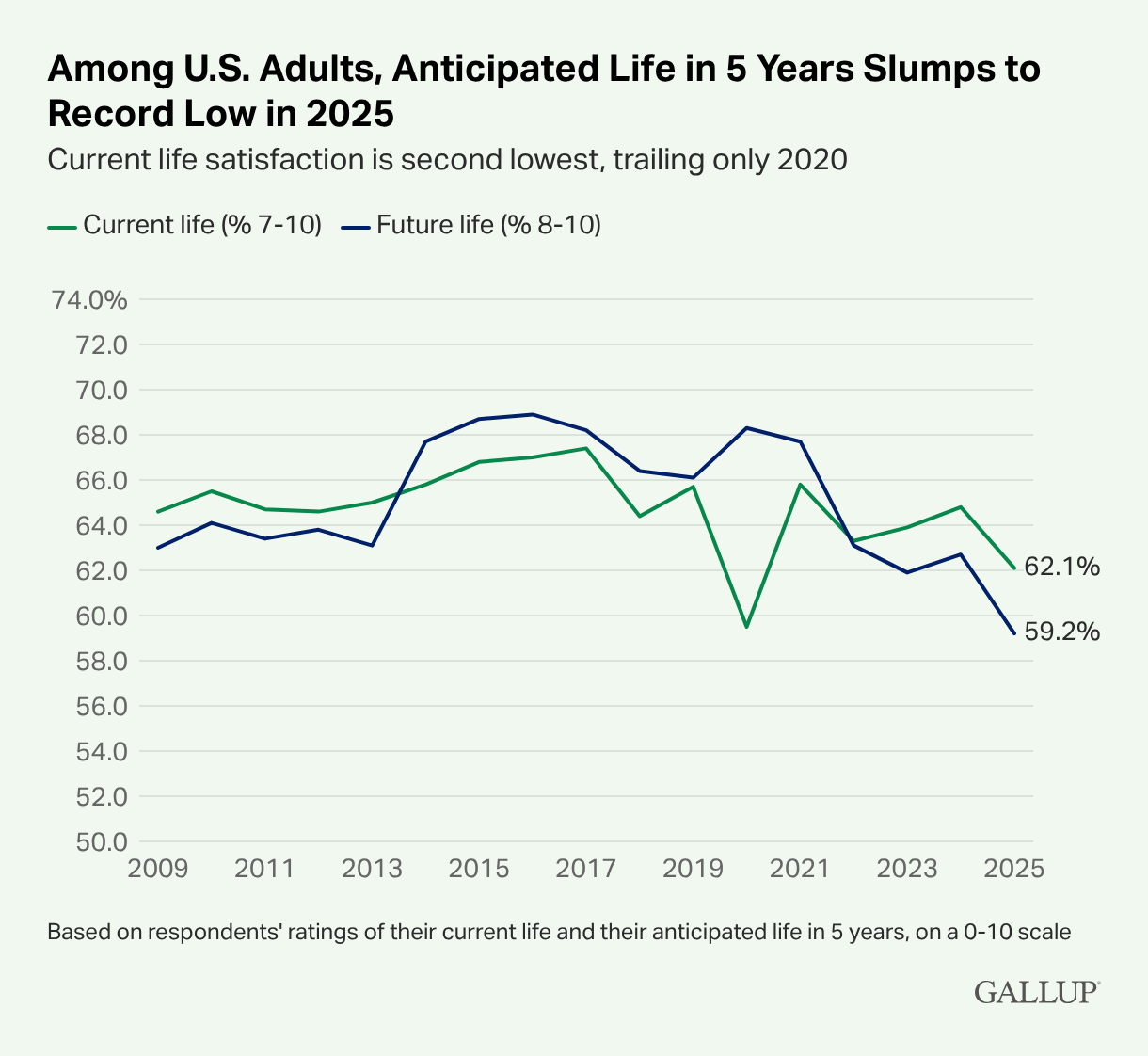
A Gallup survey from February 2026 found that U.S. Americans' outlook for the future is at its lowest point in over 20 years. The same study found that optimism remains muted across Western and Eastern Europe. Teams are swimming in this negativity. Clients feel it. Board members carry it into every strategic discussion.
And here's the brutal truth: As a business leader, there's no neutral position. Your default cognitive pattern is either amplifying that anxiety or providing an antidote. Every decision you make, every email you send, every meeting you run, you're either spreading the contagion of pessimism or building immunity through surface-level positivity, or toxic positivity, that fails to engage with the underlying issues.
Michael's experience demonstrates the transformative impact of optimism in leadership. His proactive response during a crisis, driven by a change in mindset, shows that optimism is not merely a positive outlook but a strategic asset that can influence business results.
Dr. Martin Seligman, recognized as one of the fathers of positive psychology, introduced the concept of learned optimism in 1990. His insight that optimism is a trainable cognitive skill offers a framework for leaders aiming to develop this essential quality.
Seligman's ABCDE Model serves as a practical tool for navigating challenges and fostering resilience:
Adversity: Identify the challenge.
Belief: Notice your automatic thoughts.
Consequences: Recognize the impact.
Disputation: Challenge pessimistic beliefs with evidence.
Energization: Replace with realistic optimism.
Seligman demonstrated that the way you interpret events, whether you view setbacks as permanent or temporary, global or specific, internal or external-directly influences resilience and success. This perspective can help leaders like Michael shift from reactive to proactive responses when facing challenges.
The understanding of optimism has evolved beyond Seligman's work. Dr. Deepika Chopra, known as “The Optimism Doctor,” builds on his research by offering a practical, embodied framework. Her insights are particularly relevant in negative environments, such as the one Michael's team faced. Chopra's distinction between real optimism and toxic positivity highlights the need to remain open, curious, and grounded during adversity.
Chopra's Real Optimism Framework introduces important elements for leaders seeking to apply optimism effectively:
Stay Open: Acknowledge discomfort without being consumed by it.
Stay Curious: Shift from a blame mindset to a learning mindset.
Stay Grounded: Use somatic practices to regulate emotional responses.
Stay Connected: Build supportive relationships that foster resilience.
Together, Seligman and Chopra's frameworks offer practical and theoretical tools that any leader can implement to drive performance and enhance organizational culture. They provide a blueprint for how optimism can serve as a powerful force multiplier in leadership.
What Optimism Actually Looks Like (vs. What You Think It Looks Like)
Let me be blunt: Most leaders confuse optimism with two things it absolutely isn't.
Optimism ≠ Ignoring Problems
Bad example: “Don't worry about the revenue miss. Everything happens for a reason! Let's stay positive!”
Real optimism: “We missed revenue by 18%. That's real, and it has consequences. Here's what the data tells us about where we went wrong. Here's what we're changing. Here's why I believe we can recover this in Q3 if we execute on these three priorities.”
Optimism ≠ Being Relentlessly Cheerful
You don't need to be the person who walks into every crisis with a smile. In fact, forced positivity destroys trust faster than almost anything.
Real optimism acknowledges pain while maintaining possibility: “This layoff is going to hurt. People we care about are losing their jobs. We made decisions that contributed to this moment. AND, here's what I'm optimistic about: we're restructuring around our core strength, we have runway to rebuild properly, and the people staying have chosen to be part of what we build next. Let's honor both the loss and the opportunity.”
Notice the structure: Validate reality + Acknowledge emotion + Open possibility. That's the pattern of optimistic leadership.
The Neuroscience That Changes Everything
Here's what's happening in your brain right now as you lead: When you encounter a challenge, your amygdala, your threat detection center, activates.
For leaders with pessimistic patterns, this triggers a cascade:
1. Cortisol floods your system,
2. Your prefrontal cortex goes offline,
3. Your thinking narrows to fight-or-flight options,
4. You make defensive, reactive decisions,
5. Your team mirrors your anxiety (thanks to mirror neurons),
6. Organizational paralysis spreads.
Optimistic leaders experience the same initial threat response. But their trained cognitive patterns interrupt the cascade:
1. Prefrontal cortex stays online,
2. Multiple solution pathways activate,
3. Neuroplasticity generates new connections faster,
4. Strategic thinking remains accessible,
5. Team mirrors confidence and possibility,
6. Organizational momentum builds.
Your brain is either working for you or against you. Optimism is the difference.
The Practical Protocols: How to Actually Build This Skill
Enough theory. Here's how you train optimism starting tomorrow.
The 33-Day Real Optimism Challenge (Dr. Chopra)
Week 1 - The Reframe Protocol:
Every morning, before email:
Identify one challenge from yesterday.
Write: “This situation creates an opportunity to ______.”.
Force yourself to find three different opportunities.
Example from my practice:
Challenge: Lost a key account to a competitor
Reframe 1: Opportunity to understand what we're missing in our value proposition.
Reframe 2: Opportunity to focus resources on higher-margin accounts.
Reframe 3: Opportunity to rebuild that relationship with a better offering in 6 months.
Week 2 - Evidence-Based Visualization:
Before high-stakes situations:
Close your eyes for 90 seconds,
Visualize successful navigation,
Ground every element in past evidence.
“I'm presenting to the board. I see myself speaking with clarity [because I've done this 40 times]. I see challenging questions [because boards always push]. I see myself responding with data and curiosity [because I've practiced these exact scenarios]. I see us aligning on next steps [because I've built consensus in advance with key members].”
Week 3 - The Curiosity Interrupt:
Every time you catch yourself thinking:
“That won't work”.
“We tried that”.
“That's not realistic”.
Interrupt with: “What would need to be true for that to work?”. This single question transforms you from obstacle-finder to path-builder.
Week 4 - The Three Good Things Ritual:
End every day documenting:
One thing that went better than expected.
One thing you or your team did well.
One thing you're looking forward to tomorrow.
This rewires your brain's negativity bias. After 30 days, you'll start seeing positive patterns in real-time, not just in retrospect.
The ABCDE Model (Dr. Seligman)
When setbacks hit, use this structure:
Adversity: A major client threatened to leave.
Belief: “We're losing our competitive edge. We're going to lose more accounts.”.
Consequences: Anxiety spikes. Team meeting becomes defensive. Innovation freezes.
Disputation: “Wait-is that true? We've actually added 12 new clients this quarter. This one client has specific needs we chose not to prioritize. Our retention rate is 94%.”
Energization: “This is feedback, not failure. Let's learn from it and double down on what's working.”
The PERMA Framework for Culture Design
Design your leadership approach around:
Positive Emotion: Recognize wins explicitly.
Engagement: Create flow-inducing challenges.
Relationships: Build genuine connection.
Meaning: Connect work to purpose.
Accomplishment: Track and celebrate progress.
What Optimistic Leadership Actually Sounds Like
Let me give you three real scenarios and the language that separates amateurs from masters.
Scenario 1: Delivering Difficult News
❌ Toxic positivity: “I know we're cutting 30% of the team, but this is actually exciting! Those who stay get to do more impactful work!”
❌ Pessimism: “The market destroyed us. We're barely surviving. This might not even be enough.”
✅ Real optimism: “We're reducing our team by 30%-186 people. This is painful. Some are friends. All are colleagues who helped build what we have. We're doing this because we overextended during the boom, and the market corrected faster than we adapted. Here's what I'm optimistic about: We're still capitalized, our core product has 40% year-over-year growth, and we're restructuring around that strength. The people staying have chosen to build what's next. If that's you, here's what you need to know about how we move forward.”
Notice: Validates pain → States reality → Acknowledges emotion → Points to possibility → Invites agency
Scenario 2: Strategic Uncertainty
❌ Toxic positivity: “Everything will work out! We just need to stay positive and trust the process!”
❌ Pessimism: “Honestly, we don't know what's coming. Market's a mess. We're in wait-and-see mode until things clear up.”
✅ Real optimism: “You're right-we don't have perfect clarity on the market direction. What we do have: better data than we've ever had, three scenario plans we've tested, and a team that's proven adaptive. We're not waiting for certainty. We're building optionality. Here's what each of you can control right now: [specific actions]. Let's move on to what we can influence while staying alert to signals.”
The pattern: Acknowledge uncertainty → Cite what you do know → Frame action within ambiguity → Create agency
Scenario 3: When Someone Brings You a Problem
❌ Toxic positivity: “Don't stress! I'm sure it'll work out fine!”
❌ Pessimism: “Of course, this happened. Why does everything always go wrong? Just figure it out.”
✅ Real optimism: “Walk me through what you're seeing. [Listen fully] That's a legitimate concern-I see why you're worried. What solutions have you already considered? What would you need to test the most promising one? What would success look like? Let's solve this together.”
The framework: Validate → Explore → Resource → Collaborate
Embracing the Challenge: Leading with Real Optimism
For leaders, cultivating optimism is not only a personal journey but also a commitment to transforming organizations and empowering teams. Take a moment to reflect on your leadership style: What automatic thoughts guide your responses to challenges? Are you amplifying anxiety or fostering a mindset of possibility?
Over the next month, consider implementing one of the practical protocols outlined above. Whether you select the “Reframe Protocol” to identify opportunities in setbacks, practice “Evidence-Based Visualization” before important meetings, or engage in the “Three Good Things Ritual” at the end of each day, commit to this journey of real optimism.
Additionally, share your experiences by journaling insights and outcomes observed within your team. Discuss your progress with a colleague or contribute to a leadership forum to inspire others.
+++

If you want to improve your leadership skills, broaden your impact inside your organization and beyond, or simply require an experienced outside partner, then please book an initial, no-obligation chat here.