When Powerful Leaders Say “Fuck This”
Why this matters: Most leadership advice treats language as etiquette. This piece treats it as power. Drawing on organizational research, CEO case studies, and real leadership failures, it examines why profanity sometimes sharpens authority rather than undermining it, and why the same words elevate some leaders while damaging others.
This is not about being raw or relatable. It is about judgment, timing, and knowing when control itself has become the liability. If you lead under pressure, across hierarchies, cultures, or public scrutiny, this is a framework you will want before the moment arrives when you are tempted to say, “fuck this.”
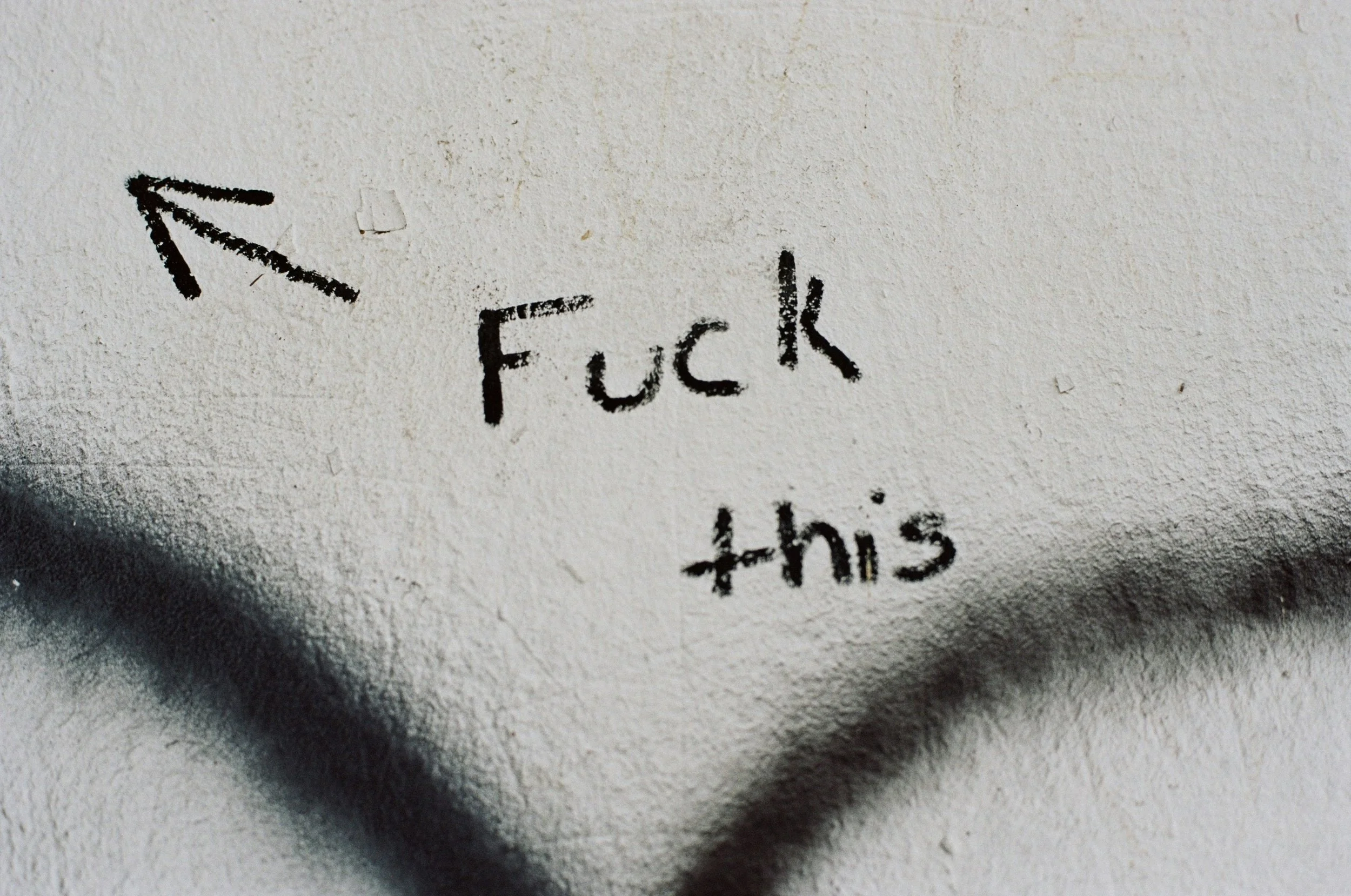
There is a moment every serious leader recognizes. The data has been reviewed. The politics have been navigated. The room has talked itself into circles. Something in the body tightens. Not because the leader has lost control, but because control has become the problem.
That is often the moment a powerful leader says, quietly or aloud, “fuck this.”
This phrase signals a decisive turning point and a refusal to maintain the status quo for the sake of control alone.
This is not mere venting or performance; it is a deliberate signal.
A leader who never swears may seem composed but can appear distant. Conversely, constant swearing undermines authority. Leaders who use profanity consciously do so at moments of boundary-setting, moral clarity, or significant change, thereby eliminating ambiguity in the process.
Profanity: Insights from Research
Organizational research reinforces that profanity itself is not the issue. Context, intent, and leadership judgment are.
The research reveals three critical dimensions:
Diagnostic Value - Profanity as a Stress Signal: Swearing functions as an emotional barometer within organizations. Research shows that as stress increases, annoyance-driven swearing rises. At extreme stress levels, however, swearing often disappears altogether; a silence that becomes its own warning sign. Attentive leaders pay attention not only to what is said, but to sudden changes in how people express pressure.
This diagnostic function reveals why profanity matters beyond its shock value. When leaders or teams suddenly increase their use of expletives, it signals declining dynamics and mounting friction. Conversely, when swearing vanishes in high-pressure environments, it may indicate emotional shutdown or exhaustion.
When Diagnostic Swearing Fails: In 2001, Enron CEO Jeff Skilling called a financial analyst an “asshole” on a conference call after being pressed for details about the company's finances. Far from being strategic, this outburst revealed defensive stress at a moment when the company was collapsing. Markets and observers noted it as a precursor to Enron's downfall. Not because of the profanity itself, but because it diagnosed a leader and organization under unsustainable pressure. The swearing didn't cause the problem, but it made the instability visible.
Contextual Effectiveness: When Permissive Cultures Work: In high-stress environments, leaders who permit limited, non-abusive swearing often observe improved stress management and group cohesion compared to those enforcing strict bans. This approach reflects situational judgment rather than weak leadership. Excessive control over language can create additional friction.
However, context switching remains essential. Research shows that employees consistently adjust their language for different audiences, swearing may occur internally, but is absent with customers or external stakeholders. When leaders fail to adapt, it reflects poor judgment rather than boldness.
Blanket bans may harm morale rather than protect culture. Strict no-swearing policies often erode subcultures, weaken solidarity, and increase disengagement, particularly in operational settings. The recommendation is to avoid rigid ideology and instead exercise discernment, which consistently yields better outcomes than strict rules.
When Contextual Misjudgment Occurs: Yahoo! CEO Carol Bartz was known for her profanity-laced leadership style. In 2009, she famously stated she would “drop-kick” anyone who leaked secrets “to fucking Mars,” and criticized management for “nobody fucking doing anything” to fix problems. While this language may have worked in certain internal settings to establish urgency and authenticity, her consistent use of profanity across contexts became a defining characteristic rather than a strategic tool. The lack of contrast diminished its impact, and when she was fired in 2011, her communication style was cited as contributing to cultural tensions. Permissive doesn't mean indiscriminate.
Power Dynamics: Hierarchy, Identity, and Asymmetric Reception: Research indicates that profanity is interpreted differently based on hierarchy, gender, and role. Senior leaders have more latitude but also face greater risk. What may seem like solidarity from a peer can be perceived as intimidation from someone in authority. This asymmetry underscores the need for accountability.
Importantly, senior leaders swear less often, which is exactly why it works when they do. Swearing is far more common at lower organizational levels. Executives use it sparingly. This scarcity effect explains why a senior leader's profanity feels deliberate and consequential rather than casual. Authority is not created by language; it is clarified through it.
Who Can Swear, When, and at What Cost
Research on profanity and leadership reveals an uncomfortable truth: Swearing is not received equally across demographic groups. The strategic logic that strong language can clarify stakes and signal resolve applies broadly, but the permission structure does not. Some leaders are rewarded for breaking decorum, while others are punished for the same act.
Gender & Identity - Research consistently shows an asymmetry. Men who swear in professional settings are more likely to be read as decisive or authentic. Women using identical language in identical contexts face penalties, including lower perceptions of competence, promotability, and emotional control. For women leaders, conscious swearing carries a higher risk and demands tighter judgment. It can work, but often only after credibility is already unquestioned. Leaders from non-dominant cultural backgrounds face similar dynamics in which swearing may be read as performance rather than authenticity.
Cultural Context - Norms around profanity vary widely. Mild swearing may signal candor in parts of Northern Europe, while constituting a serious loss of face in many Asian business cultures (sometimes causing allergic responses). In global or mixed settings, there is no shared linguistic grammar. The safest default is restraint, reserving profanity for contexts where norms are explicit and shared. Cultural intelligence shows up not in consistency, but in adaptation.
Executive Presence & Contrast - Profanity gains power through contrast. When a typically measured leader breaks decorum, attention sharpens. The effect comes from rarity and intent, not from the word itself. Used habitually, it becomes noise. Used sparingly and deliberately, it can mark finality, resolve, or urgency. JPMorgan Chase CEO Jamie Dimon's leaked remarks (“fucking Zoom”) on remote work illustrate both sides: authority created by breaking expectations and the risk of loss of containment.
Politics, Power, and Public Life - In politics, profanity has shifted from taboo to strategic signal. Public figures increasingly use it to project defiance, authenticity, or moral outrage, particularly in polarized environments where decorum is already fragile. This can mobilize supporters, but it also alienates audiences that associate restraint with legitimacy. The lesson for business leaders is not imitation, but discernment. Organizational contexts differ from political ones, and language that consolidates power in one arena may fracture trust in another.
Self-Regulation & Pressure - Swearing can function as a controlled pressure release. Neurolinguistic research shows that taboo language activates emotional processing more directly under stress. In contained settings, this can prevent pressure from leaking into micromanagement, withdrawal, or passive aggression. The trust-building effect comes from accountability afterward. Unreflected swearing erodes safety. Reflected swearing, followed by repair, can strengthen it.
The bottom line? Profanity clarifies authority; it does not create it. Its impact depends less on the word than on who speaks, where, and how rarely.
Profanity & Communication Effectiveness
Communication effectiveness at senior levels is rarely about precision alone; it is about memorability, credibility, and emotional truth. Conscious swearing can sharpen all three by increasing recall, cutting through abstraction, and signaling that the speaker is not hiding behind corporate language.
Consider these examples.
Setting Boundaries: There are moments when politeness becomes complicity. A firm “This ends now” may be correct, but ignorable. “This ends now. I'm not doing this again,” followed by “Fuck this,” removes doubt about resolve. Used by a leader with established self-control, it signals finality rather than anger.
Emphasizing Norms: Profanity can underline values when ethical lines are crossed. Saying, “We don't treat people this way,” is principled. Saying, “We do not treat people this way. Ever,” may suffice. In moments of clear moral violation, a restrained “This is fucked up” can convey shared outrage and reinforce norms more quickly than policy language.
Clarifying Priorities: Profanity can function as a cognitive anchor. When a leader says, “If we get nothing else right, we cannot fuck up this client transition,” the message is clear and memorable. This works when the leader wants to prevent diffusion of focus and signal consequence. Overuse dulls the effect and creates noise.
Intensifying Recognition: Occasional profanity can raise the emotional weight of praise when excellence truly stands out. A leader who normally speaks with restraint, saying, “That was a mess, and you cut through it. Fucking well done,” signals respect and confidence in the judgment shown. It works because it feels unfiltered and earned. Without specificity or follow-through, it collapses into flattery.
However, profanity should never replace thoughtful decision-making. Research from Fortune shows that increased swearing by CEOs often correlates with periods of financial instability. In such cases, profanity may reveal stress rather than strategy, and markets interpret it as volatility.
Conscious swearing is effective when it achieves one of three objectives:
It clarifies the stakes. For example, a well-timed “This is bullshit” can immediately distinguish between acceptable risk and unacceptable behavior.
It marks a transition. The phrase “fuck this” often signals a strategic pivot, an exit, or a refusal to continue with an unproductive course.
It establishes solidarity. In certain contexts, shared profanity can signal trust and insider status. Studies on permissive leadership cultures show that non-conventional language can strengthen bonds (and even physical performance) when group norms support it.
The Cost of Getting It Wrong
When swearing becomes incivility, the negative impact is measurable. Studies on workplace rudeness show declines in cognitive performance, trust, and retention among those exposed to verbal aggression. Incivility spreads rapidly and erodes organizational culture.
For frontline workers, especially those interacting with increasingly angry audiences, leaders must exercise additional caution. Profanity directed at employees or tolerated from customers without intervention suggests that dignity is negotiable. This undermines loyalty more quickly than any strategic error.
So, When Should a Leader Swear?
This is not permission to be an asshole. Instead, it offers a framework for moments when breaking decorum becomes a strategic necessity.
Leaders who treat profanity as a finite resource, deployed only when it truly matters, command attention in ways polished corporate language cannot.
Misjudge the context, the power dynamics, or the cultural moment, and trust evaporates.
+++

If you want to improve your leadership skills, broaden your impact inside your organization and beyond, or simply require an experienced outside partner, then please book an initial, no-obligation chat here.